

Published for International CJD Awareness Day 2026.
Please note that this story contains detailed accounts of the challenges a family faced during a prion disease diagnosis and care journey. Some readers, particularly those currently affected by prion disease or bereavement, may find parts of it distressing.
Donna wrote this account on behalf of her father, Barrie. Drawing on both her family’s experience and her professional perspective as a Senior Nurse in Dementia Care, she describes the many challenges they encountered while navigating diagnosis, care and the various services involved in supporting her father.
The family’s story includes incredibly difficult moments, alongside examples of outstanding healthcare professionalism and compassion. If you are currently dealing with the impact of prion disease, please consider whether reading this detailed account feels right for you at this time.
This is an important record of one family’s experience. Sadly, Donna, Barrie and their family are not alone in facing many of the issues described below.
From Barrie’s daughter, Donna:
One in a Million
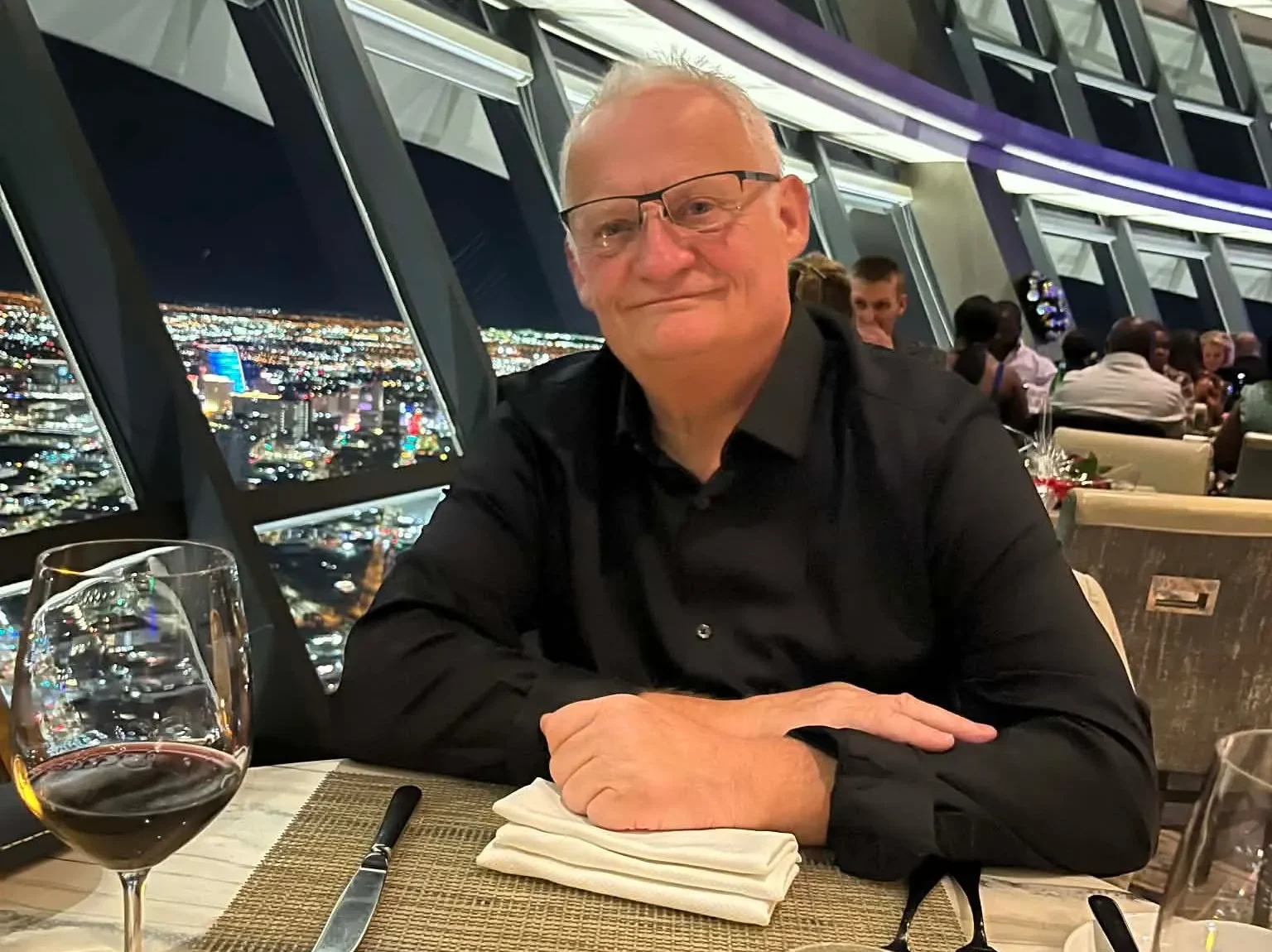
Let me begin with my dad, because he is the most important part of this story.
My dad was 66 years old. He was the kindest, most caring, fun‑loving man. He was adored by his family and loved by everyone he met. He was loyal and always put others before himself.
He was the hardest‑working person I have ever known: always first to work and the last one home and I never remember him taking a day off. He would give his last to anyone and would do anything for anyone.
Dad had a witty, charming personality and the most beautiful smile. I never remember him being ill, apart from some prostate issues a year or two before his diagnosis. Aside from that, Dad was fit, well, and healthy. In fact, we were often telling him to slow down.
By February 2026, we had reached what I can only describe as crisis point with his health.
That moment, and everything that led to it, is why I am writing this on behalf of my dad.
The First Changes
In July 2025, Dad visited his GP because he just wasn’t himself. He couldn’t quite put his finger on what was wrong, but he knew something wasn’t right. His mood was low, and he was experiencing mood swings and emotional changes that were completely out of character for him.
The GP diagnosed depression and started Dad on medication. We accepted this. We rallied around him, supported him, and tried to help in every way we could. Shortly afterwards, Mum and Dad travelled to Tanzania to visit my sister. At the time, we truly believed that rest, family time, and some much‑needed fun would help Dad feel more like himself again.
Things didn’t really improve after the trip.
Instead, over the following months, Dad slowly began developing new symptoms. He wasn’t coping at work anymore and work had always been his life. He began losing interest in things he loved. He struggled with day‑to‑day tasks. His memory was noticeably affected. As time went on, he started experiencing problems with his balance and coordination.
During a trip to London, Dad had a fall that completely knocked his confidence. From that point on, the falls became more frequent. Each time, Dad fell backwards.
At the same time, Dad was awaiting a knee replacement. For a while, we hoped that surgery would resolve many of the issues we were seeing. But by November and December 2025, it became clear that the knee wasn’t the explanation, or at least not the whole one. There was definitely more going on, but we didn’t know what.
As a family, we talked through every possible scenario: Dementia, Parkinson’s, and countless other conditions it could be. But everything was happening far too quickly to fit neatly into any diagnosis.
Repeated Attempts to Get Help
Over these months, Mum and Dad were back and forth to the GP surgery multiple times, presenting with the same concerns. Dad was referred to both Falls and Neurology for further investigations.
It’s important to note here that amongst this dad’s knee replacement surgery took place in early January 2026 at Hospital 1, so during these difficult months that followed he was also recovering from significant surgery. We wouldn’t have proceeded with the surgery had we known how ill Dad was at this time.
Taking Dad to the GP became increasingly difficult. At times, it took up to an hour just to get him into the car and make the short drive to the surgery, a journey that normally took five minutes.
One particular appointment stands out.
We had struggled to get Dad to the GP. The doctor was clearly concerned about his deterioration and requested urgent blood tests. We returned to reception only to be told there was a two‑hour wait. There was no way we could manage getting Dad home and back again, so we stayed in the waiting room with him even though he was visibly unwell.
Two hours later, when we finally went in to see the nurse, she said, “Oh, if I’d known you were out there, I’d have called you in.”
It was basic communication and it was missing. It was obvious just by looking at Dad how much of a struggle that visit had been, yet nobody acknowledged it or tried to make things easier.
The Final GP Visit Before Admission
The week before Dad was admitted to hospital, he attended the GP again following more falls, by this point they were excessive. This GP expressed genuine concern after witnessing Dad’s mobility during the appointment. He explained that he was going to attempt an emergency neurology referral.
Dad had already been referred to Falls and Neurology previously by another GP. A few days later, this same concerned GP rang us to explain that the emergency referral had been declined. Neurology would not see Dad until he was reassessed by the Falls service.
He told us that if we didn’t hear anything by Friday of that week, he wanted us to bring Dad back for an emergency appointment. He said he was very worried and was trying to get Dad seen. He also discussed hospital admission as a potential alternative if nothing progressed.
On the Friday morning, we rang the surgery as instructed. Unfortunately, we were unable to see the same GP. The GP we did see dismissed the previous GP’s concerns and described him as being over‑cautious.
We were told she had only ten minutes per patient but could do a quick assessment. After that, Dad was told to go home — that things would improve — that his head was “just full.”
We left the surgery that day in complete crisis.
How can you attend the same GP surgery repeatedly with the same serious issues and have nothing done? Dad was usually fit well and so full of life… what was it that they weren’t hearing or seeing?!
Mum came away feeling she had wasted people’s time while inside she felt she knew something was wrong. And all she thinks about now is: if that’s how she felt, how must Dad have felt?
Nobody was listening. Dad was only 66 and normally fit and well working full time passionately running his own business until a few months prior and now he was a shadow of this character and could barely walk.
Hospital Admission – 20th February 2026
That same evening, Dad fell again.
This time, we couldn’t get him up. After the earlier GP appointment that day left us completely lost, we talked it through with Dad and agreed that we had no option left but to take him to hospital and try to get some help. It was the last place I ever wanted to take him — but we truly had no alternative.
Dad spent approximately eight hours on the floor at home that evening. There were no ambulances available. Eventually, a staff member that attended the house helped us get Dad into the car and gave us ambulance paperwork to take with us. On arrival at Hospital 2, nursing staff helped us get Dad from the car into the department.
We waited patiently for hours, understanding the pressure the department was under. We didn’t make a fuss.
Dad was finally seen by a doctor 16–17 hours after his fall.
Over the following days, we moved between A&E and AMU, waiting for answers. I had to repeatedly beg for Dad to be moved to a quieter space, for him to be given a recliner or a bed, and for fluids. He was completely exhausted and confused — presenting as a frail elderly patient rather than the active, independent man I knew.
Experiences in A&E and AMU We Will Never Forget
The Health Care Support Worker in A&E
Dad needed the toilet. Mum and I had always done all of Dad’s care, he was a proud man and had never needed help before. Mum wheeled Dad toward the bathroom. A healthcare support worker ushered Mum aside and said, “We’ll take it from here — it’s what we do.”
Mum didn’t know what to do. She walked back to me, clearly anxious about leaving Dad, knowing how much he would hate anyone else helping him with such personal care.
When Dad returned, he was upset. During the transfer back to the chair, he said, “You touched my bum.” The HCSW pulled a face and huffed, as if Dad had been inappropriate.
He hadn’t been.
She had touched him, and he didn’t like it. He was telling her, and rightly so.
Dad later explained they rushed him in the bathroom and tried to stand and transfer him quickly. He needed time — his brain wasn’t working properly, and physically he couldn’t do it. None of that was listened to. When we tried to explain that this was uncomfortable for Dad and that Mum had always done his care, it was ignored.
From that point on, Mum and I never left Dad’s side for his entire hospital stay. Between us, we provided 24‑hour care. No other nurse carried out Dad’s personal care again.
The way that interaction left Dad, and us, feeling was unacceptable. What stays with people is not “how things are done here,” but how they are made to feel in that moment.
The Triage Room – The ECG
After hours of waiting, exhaustion had completely set in. Mum and I were trying to manage Dad’s care in the waiting room—helping him to the toilet, keeping him safe, trying to comfort him—on no sleep.
Dad was called in again, this time for an ECG. He didn’t know what an ECG was. We helped him onto the stretcher bed in the triage room, and the nurse said casually that they were “just going to do an ECG.”
Dad asked what that was.
He was ignored.
Instead, both the nurse and healthcare support worker turned their attention to the computer. The HCSW began loudly complaining about her online training—ranting about how ridiculous it was, how she didn’t care, how she wasn’t going to complete it, how she couldn’t work out how to do it. She went on and on.
The registered nurse moved back and forth between sticking electrodes onto Dad’s chest and helping the HCSW with the training on the computer.
Dad lay on the bed silently, staring at the ceiling.
Waiting.
I stood there watching this unfold in disbelief as both staff continued to ignore him completely. Eventually, I said quietly,
“I think they’ve forgotten you, Dad.”
Even that did not prompt either of them to acknowledge him.
Dad was frightened.
Dad was confused.
If we are honest Dad was dying……we just didn’t know it yet.
If you are reading this, please do better.
And yet—on the flip side—there were the two HCSWs who greeted us later that morning to take Dad’s observations. After the long, sleepless night, they were kind and compassionate. They apologised for the wait, explained that doctors were now working through the morning list, reassured us that things would move soon, and acknowledged how difficult the situation was.
In the five minutes they spent taking Dad’s observations, they made it about him.
Those moments are remembered. If you are reading this Thank you.
Tea and Coffee: Small Things, Big Impact
Tea and coffee are lifelines in A&E and assessment units.
To the lady serving breakfast from the A&E trolley who aggressively asked if I was a patient:
No, I wasn’t. I was a relative getting a drink for my dad, who had spent the night on the floor at home and was now extremely unwell.
I bit my tongue at the time because I didn’t want to cause a fuss for Dad. But the rudeness was unnecessary. Watching the trolley being handed out as though it were personally owned, with little regard for those waiting, was upsetting.
Kindness costs nothing.
In AMU, another interaction left a deep impression. Dad was confused and didn’t understand why his wife couldn’t have a coffee. Every time the tea and coffee trolley came around, he asked for one for Mum, offering to pay. He just wanted to buy his wife a drink.
Instead of being reassured, he was argued with. He was lectured about how many people were in the department and how not everyone could have one.
He didn’t understand.
All that was needed was a cup with a little water—to ease his distress. Instead, the explanations continued, and Dad became increasingly upset.
We didn’t care about the coffee, we were keeping Costa in business by this point. But Dad cared. And we cared about how he was left feeling.
And then there was Hayley.
Hayley also handed out food and drinks in AMU, but the difference was immediate. She wore a genuine smile. She spoke to Dad—not around him, not past him, but to him. She didn’t vent about her challenges, though I’m sure she faced the same pressures as everyone else.
She noticed Dad’s confusion and adjusted her approach instinctively, quietly, kindly.
I watched Hayley go around the entire department, day after day, treating every patient as an individual and going the extra mile. One morning, Dad was in the shower while she completed her round. She deliberately came back to him, wrapping his toast in foil so it would stay warm. She recognised that we had been there for days and offered Mum a drink without being asked.
These small acts made an enormous difference.
Names like Hayley stay with you for the right reasons.
Everyone serving on those trolleys should be more like Hayley.
Alex and Theo – Neurology
Down in the assessment departments, Alex and Theo from the Neurology team saw Dad.
Thank you both for your patience, kindness, and the way you treated Dad.
You took time with him. You allowed him to answer questions at his own pace. You waited as he struggled through the tasks required for examination. Alex, I still remember you laughing with Dad at his witty responses, allowing a flicker of his personality to shine through.
Theo, I saw exactly what you were doing when you explained the lumbar puncture—not once, not twice, but three times. You carefully explained, asked Dad to repeat back what he had understood, and then stepped away and returned again to be sure. You were assessing capacity, but you did so without ever making Dad feel exposed or embarrassed by his confusion.
You were also kind to me and my brother as we waited in the corridor, asking if we had any questions. At the time, we had no idea that our world was about to fall apart.
I suppose I should have noticed when phrases like “academic interest” were mentioned—but I never imagined what we were facing. You both recognised my nursing background later, but in that moment it didn’t matter. I wasn’t a nurse; I was Dad’s daughter.
A Long Night in AMU
One night in AMU stands out above all others.
Dad was profoundly confused. All night, he believed he was at an airport. He was convinced he had missed his flight. There was absolutely no settling him. If I hadn’t been there, he would have required Red‑level enhanced care.
I had chosen to provide all of Dad’s care—but that night, nobody even checked if we were coping.
The environment worsened his distress. Two nurses gathered at the nurses’ station outside Dad’s curtain and spoke in their own language for most of the night. I am convinced that this contributed to Dad believing he was abroad. Each time they spoke, Dad responded from his bed—calling out, panicking, convinced he was about to miss his flight.
I wasn’t in work mode—I was Dad’s daughter. Or maybe it was my place. It went against everything I do on a daily basis and everything I work so hard to achieve for others but in this moment, I was broken.
The night felt endless.
By early morning, exhausted and helpless, I stood in the corridor in tears and begged a healthcare support worker:
“Please, can we move Dad somewhere quieter? We haven’t slept for days. He’s so confused and distressed.”
She listened. Dad was moved to a side room.
And he settled.
Please, if you’re reading this, be mindful of your behaviour on night duty. It matters more than you realise.
Transfer to the Ward
We were eventually moved from the assessment department to a Ward, and a new chapter began.
On arrival, I asked to speak to the Ward Manager. I was worried we wouldn’t be allowed to stay with Dad, and we soon learned that he had been handed over as independent and self‑caring.
That couldn’t have been further from reality.
Dad required full assistance with personal care, assistance of two for mobility, and was a high falls risk, having experienced more than ten falls in the four weeks before admission, including a long‑lie fall. He was also confused and disoriented to the extent that he would have clearly met criteria for enhanced care in the assessment units.
This was the first time I seriously questioned whether by providing Dad’s care ourselves, we might actually be masking the extent of his needs.
Despite everything I had seen, there was no way I was leaving him.
After discussion with the Ward Manager, we were allowed to stay and continue providing Dad’s care. Aside from one discussion around medication, I didn’t see the Ward Manager again during Dad’s admission which was a real shame given what followed.
Once on the Ward, we settled into what would become a pattern of suppressing concerns to keep the peace, because Dad hated a fuss. He was desperate to get better and go home, and he truly believed that anything I raised would somehow be held against him.
So, I stayed in daughter mode.
And I watched.
And I grew increasingly frustrated.
Despite being on the ward, nothing improved in terms of communication or awareness of Dad’s needs. For two full days after Dad arrived, the bathroom bin in his room remained full of incontinence pads left behind by the previous patient. We asked politely, more than once, for it to be changed. Each time, we were reassured it would be done. It wasn’t.
The healthcare support worker on duty flitted in and out of Dad’s room, repeatedly complaining to us about her workload and about other patients on the ward. It left us wondering whether she also spoke about Dad in the same way elsewhere.
Her constant complaining was exhausting. And yet, she had very little to do for Dad because Mum and I were doing everything except his observations.
It felt profoundly unprofessional
Then, we met Teagan and Abby. You always remember the names of the people who make a difference.
They came into Dad’s room smiling, introduced themselves properly, and spoke to Dad directly. Nothing was too much trouble. They wrote their names on the board. They checked with us that we were still happy to provide Dad’s care and encouraged us to call them if we needed anything at all.
They immediately noticed the full bin. They agreed it was unacceptable, apologised sincerely, and within ten minutes had arranged for a domestic to attend. They brought clean bedding without being asked. They recognised Dad’s intermittent confusion and the way he sometimes realised he wasn’t quite making sense and they adapted naturally.
They laughed with him. They joked with him about the blood sugar needles he hated so much. They treated him like a person.
Every time one of them left the room, Dad would look at us and say,
“She’s so nice.”
If you’re reading this thank you. Please be more Teagan and Abby.
And to Shaq who, after many nights of us sat in a hard back chair, provided us with a recliner (that was promised by the ward manager on day 1) to stay next to Dad for our last few nights. This was a real luxury by this point that we were very grateful for.
The Domestic Incident
When the domestic eventually arrived to change the bin, her frustration was obvious. She huffed and puffed as she worked, loudly ranting that it was unacceptable the room hadn’t been cleaned properly for two days.
I silently agreed.
But then something happened that still makes my stomach knot.
Dad, confused and unsure of what was going on, sat in his chair and apologised to her.
“Sorry love, it’s not my fault.”
Rather than reassuring him, she snapped back,
“I didn’t say it was your fault!”
Why?
Why did that need to be said?
Dad had done nothing wrong. He was visibly vulnerable, embarrassed, and trying to be polite. I was so angry I felt I might lose control if I spoke. I held it in for Dad’s sake, because I knew he wouldn’t want me to challenge it.
But that interaction hurt him, and it hurt us.
Please think about how words land on someone who is already frightened and unwell.
Missed Medications
During Dad’s admission, he was prescribed an IV medication to be given three times a day. On multiple occasions, doses were missed despite Mum and me repeatedly reminding staff that it was due.
On two consecutive days, the medication was given so late that the third dose couldn’t be administered at all.
That was all that was required for Dad: IV medication and observations. And even that wasn’t managed consistently. And at this point every hope we had of Dad making improvements was pinned on that bag of IV medication.
Dad’s response, as always, was to minimise it.
“Don’t worry love, it’s okay.”
But it wasn’t okay. And nobody seemed to acknowledge that it was a problem
“Housing” My Dad
Then the male ward doctor came to see Dad.
He explained to us that he was a liver specialist and that Dad’s liver was fine. He said he was essentially “housing” Dad while waiting for Neurology input.
It was very clear from his words and manner that Dad was an inconvenience. He said Dad didn’t really need to be on his ward.
He then asked me how I felt about taking Dad home.
Of course, I wanted to take him home but we still had no answers. I said that without understanding what was wrong, it wouldn’t be safe. Reluctantly, he agreed Dad could stay for now, but he mentioned that Dad would likely be sent to a rehabilitation bed at a different hospital as he didn’t need to be there.
I was very clear that I wasn’t happy with that.
At that stage, although I didn’t know how unwell Dad truly was, I could see improvement compared to the assessment units. Cognitively, he was more settled. Physically, with one of us assisting, he was mobilising to and from the toilet, something he hadn’t been able to do previously.
Moving him again would have caused a setback, particularly with cognition and access to the toilet. I wanted answers before any transfer.
Later, the neurology team reviewed Dad and agreed it was not in his best interests to move at that point. Dad would remain in hospital over the weekend.
Dad was furious with me.
He believed the ward doctor had said he could go home and that he was only being kept in hospital because I had interfered. His mood plummeted. He said he wouldn’t eat. The weekend that followed was incredibly difficult.
We spent it trying to lift his spirits, reassure him, and manage his distress—all while knowing something was deeply wrong.
If you are the doctor I’m referring to, or any doctor reading this, please consider your wording. Please consider the power your words have.
You made my dad feel like an inconvenience.
In reality, my dad was dying while you were “housing” him.
Shortly after, CJD was mentioned for the first time, albeit tentatively. We were told opinions were mixed and not to focus on anything until results were back. At that point, the only concrete information we had was encephalitis on scan.
Dad was being treated with anti‑viral medication. Tests had been sent off, many of which take time.
We were warned that Dad might be discharged home without answers and followed up by Neurology as an outpatient. Everything so far was coming back clear.
Dad was fed up with hospital. We were beginning to think we might actually go home without knowing what was wrong.
And yet, Dad appeared better. He was more mobile than he’d been in weeks. He was less confused. Conversations were closer to normal. We thought the IV treatment must be doing something.
We dared to hope.
Barrier Nursing with No Explanation
Just as we were beginning to believe things might be improving, we walked out of Dad’s room one morning to find a yellow infection control sign fixed to the door. A chair with gloves and aprons stood outside. Staff were putting them on before entering.
No one had spoken to us.
No one had explained why.
Barrier nursing had simply begun.
I questioned it immediately. I stepped outside the room and asked a healthcare support worker,
“Is this for Dad?”
She replied, “Umm… yeah.”
I asked why.
She pulled an awkward face, shrugged, and said,
“Well… don’t you know what he was admitted with?”
I told her plainly,
“You obviously know something I don’t.”
A nurse eventually explained that it had been documented in Dad’s notes that staff were to wear gloves and aprons but she couldn’t tell me why. I asked that the doctors come to explain it properly, to both us and Dad.
Later that day, the female ward doctor and members of the neurology team came together. We were told not to worry and that the infection control team were simply being “over‑cautious.” Any mention of infection, we were told, triggers this response.
I responded that you don’t just commence barrier nursing on someone without explanation.
I could see that Alex from Neurology knew I understood there was more to it than that. Still, the conversation ended there. I let it go which is something I still regret. I should have pushed harder. I should have insisted on an answer that made sense. Any other time I would have but right now I was weak.
They left.
The Corridor Conversation
The following morning, the neurology consultant came to see Dad. After examining him, he asked to speak to Mum and me in the corridor.
That was the moment our world broke.
He began by asking me whether I was the Senior Nurse for Dementia Care, someone had mentioned it to him. I confirmed it was me. Then, without warning, preparation, or explanation, he said:
“This is CJD.”
We stared at him, confused.
“What?”
He repeated it.
“This is Creutzfeldt‑Jakob Disease. He will be referred to palliative care.”
We stood there in the middle of a busy ward corridor, in complete shock. No one explained what CJD was, what it meant, what to expect… nothing. I can only assume he thought that because of my job, I already knew. At some point, it was mentioned that a team from London would be in touch.
I asked, “There’s no treatment, is there?”
I had Googled CJD a few days earlier when it had been briefly mentioned as a test. He confirmed there was no treatment.
I then asked, “What about Dad?”
His response was,
“He doesn’t need to know.”
I couldn’t believe what I was hearing.
What do you mean he doesn’t need to know?
And with that, they were gone.
Mum and I were left standing in the corridor, sobbing, our world in pieces.
Telling Dad Ourselves
Dad was sitting in his chair inside the cubicle. That conversation happened just outside his door.
We went back in, crying, and sat with Dad and told him what we had been told.
He listened. His eyes filled with tears. Then he looked at Mum and said quietly,
“Well Love, we’ve had a good life.”
My heart shattered into a million pieces.
How did we go from Theo carefully ensuring Dad understood a lumbar puncture, to being told he didn’t need to know he was dying?
I am still disgusted by how that was handled. I wish now that I had been strong enough to go after the consultant and bring him back to speak to Dad properly. Instead, Mum and I sat there in shock, holding my dad while everything fell apart.
Google became my teacher. Nobody else bothered to explain what Dad had been diagnosed with or what we could expect next. How little we knew about what was to follow.
Being Seen — But Not Spoken To
We called my brothers and sisters to come to the hospital.
While I was on the phone outside the cubicle, I noticed the palliative care consultant and several doctors gathered around a computer just outside Dad’s room, studying his scans. It became clear that Dad was one in a million – a case many of them would never expect to see in their careers.
The talk about “academic interest” suddenly made sense.
What I cannot understand is this:
You all stood there. You looked at his scans. You took what you needed from them.
And not one of you – not a single one – came to speak to Dad or to us.
No one explained what the diagnosis meant.
No one checked how he was coping.
No one discussed end‑of‑life planning.
I sincerely hope none of Dad’s information is being used for academic purposes without consent, because nobody asked.
I recognised who you were because of my job. People whose roles exist to advocate patient experience, dignity, and future planning. Yet you vanished from Dad’s journey entirely.
Did anyone consider that a man with this diagnosis deserved a robust care plan, one that ensured a safe, dignified death in the weeks that followed?
Did you ever consider how traumatic this disease is for the patient and family.
Because we never heard from neurology or palliative care again.
Yes, the palliative consultant later advised the hospice nurse on syringe driver medications during Dad’s final days, and for that I am grateful. But for me, it was too little, too late. Dad deserved better than last‑minute scrambling while he suffered.
Acknowledging the Effort — And the Failure
I want to be clear about something.
The effort to obtain Dad’s diagnosis was impressive. If you know the literature, we were actually fortunate to receive a confirmed diagnosis at all, and within such a short timeframe. Dad presented to Hospital 2 on 20th February and was diagnosed by 3rd March. Many families never get that clarity.
But somewhere along the way, the focus shifted entirely away from Dad as a person.
You found the answer and forgot the man!
Bringing Dad Home
That day, we made the decision to take Dad home.
There was nothing happening in hospital that couldn’t be done at home. All of Dad’s care was already being provided by Mum and me. The IVs stopped. Observations were pointless now.
The physiotherapist arrived midway through an assessment when the consultant came to deliver the diagnosis. We had repeatedly asked for physio input earlier and were told Dad wasn’t “medically fit which we now knew he never would be.
The physio didn’t feel Dad was safe but we agreed he hadn’t been safe before admission and wasn’t going to become so. Rehabilitation would achieve nothing. I refused for Dad to be transferred to a care‑of‑the‑elderly ward for rehab. It would bring no benefit.
By this point, the team realised I was serious.
We requested discharge home with full support. The female ward doctor came and sat with us. She acknowledged it had been a difficult day and agreed there was nothing happening in hospital that couldn’t be managed at home. After discussion with the London team, she agreed Dad could go home that day. This was not a discharge against advice it was agreed.
The physio team were kind and brought us tea and biscuits, 1 nurse came and took Dads venflon out. But aside from this we didn’t see or speak to anyone. Nobody from the nursing team or anyone said a word. We were just given a devastating diagnosis……and we left……in shock and broken.
An ambulance couldn’t be arranged as it was after 3 pm so we took Dad ourselves.
And with that we took him home.
Where he wanted to be.
The National Prion Clinic
Dad was discharged home on the Tuesday.
On the Friday, a doctor and nurse from the National Prion Clinic in London visited our house. We were immensely grateful for that visit. For the first time since Dad’s diagnosis, everything was explained properly: what his diagnosis meant, what we could expect, and how this disease progresses. Although it was devastating, we needed to understand what we were facing.
They examined Dad fully and spent around four hours with us at the house. They confirmed his diagnosis: Sporadic Creutzfeldt‑Jakob Disease.
They told us they would support us in liaising with local services and that, because CJD is so rare, there is government funding available to support patients, meaning Dad would not need to go through standard funding assessments. We were told Dad would require a specialist chair because he was already struggling to hold himself upright. We had been planning to purchase a rise‑recline chair for him but were advised not to, as specialist equipment would be provided.
We were given email contacts and reassurance that they would stay in touch and revisit in six weeks.
Nura and Chi were supportive and responsive throughout they answered every question, email and call so timely. They were so supportive and advocated to local teams for us when nobody was listening. And at times I believe they were sharing our frustrations.
For that we will always be grateful…..if you are reading this…Thank you!
At that moment, we felt supported. We felt seen.
Deterioration Begins
Dad had been at home a week and was clearly deteriorating already. Every day things became harder. We had transformed the living room into a small care space. Dad was still mobilising slowly with a walking frame, but everything was an effort. The chair became a serious issue — he simply couldn’t sit safely or comfortably.
I emailed the London team to inform them of Dad’s deterioration. I also contacted the GP surgery to ask who we should be engaging with locally as we had heard nothing.
That was the beginning of what I can only describe as the phone‑call war.
No One Knows Anything
Despite a discharge summary from the hospital and a letter from the London team, the GP surgery acted as though they knew nothing about Dad’s diagnosis. This was the same GP who had dismissed him on the day he was admitted and later sent a text saying she “heard he was in hospital wishing him well”. So, they were definitely aware.
When I called, I was told there was nothing the surgery could do because they hadn’t received referrals from the hospital. I was told to contact the ward.
The ward told me Dad had been home a week and there was nothing they could do. It became apparent that Ward hadn’t completed any referrals to the community teams for Dad.
I rang the GP back again and was told we needed to self‑refer Dad to social services and Palliative Care. Self-refer?!
I was losing patience. I had already made dozens of phone calls by this point. Alongside caring for dad 24/7 it was exhausting; my focus should have been with Dad not this battle.
Between 10 and 14 days after discharge, I eventually reached the District Nursing clinical line and quite honestly begged for help. After that, we began receiving some visits from the District Nursing team and a local hospice.
“Declined Palliative Care”
It was during this period that I discovered a note in Dad’s records stating that he had declined palliative care, which was allegedly the reason for delays in community support. This and lack of referrals.
I was furious.
Dad had not declined anything. Nobody had spoken to him. Nobody had explained palliative care. The GP later told us this actually meant he had declined to stay in hospital for palliative care — which is also untrue, because that option was never offered, discussed, or explained.
The only thing we declined was a rehabilitation bed on a care of the elderly ward, an entirely inappropriate option for a dying 66‑year‑old man who was fully aware and wanted to be at home.
That single inaccurate entry caused enormous delay and distress.
District Nursing: Criteria Over Care
Every interaction with District Nursing felt like a battle. We weren’t asking them to provide care – Mum and I were providing it – we were asking for resources so we could do it safely.
I was told to buy Dad’s own continence products because a referral could take weeks. Dad was incontinent now. We needed supplies now. I questioned how that made sense if nurses would ordinarily require supplies in place before providing care.
In the end, we bought everything ourselves.
To this day, Dad’s continence delivery never arrived. He received two bags: one a nurse found in a cupboard, and one the social worker sourced herself.
“We Are in Crisis”
One Friday afternoon, I rang the District Nursing line in absolute distress and said, plainly, that we were in crisis and needed help. I was told the manager was off and that I needed to speak to, the deputy. I was assured someone would call me back.
No one did.
The weekend passed. We managed alone.
On Monday morning, the District Nursing Team Manager arrived at the house. I explained what had happened. He told me the Deputy had been working all weekend and said he would find out what had gone wrong.
As he began assessments, it became clear he knew very little about Dad’s diagnosis or why he was there. He spoke about criteria, forms, MDT meetings, and six‑to‑eight‑week waits.
I asked him directly if he understood Dad had CJD. He said yes.
I told him those timescales were unrealistic: Dad was deteriorating now.
His response floored me.
He asked, “Well, have you had a prognosis?”
He began talking about enteral feeding and questioned the need for a DNAR as without this CPR would have to happen and dad was deteriorating. His lack of understanding was frightening and deeply distressing, especially as Dad was present during this conversation.
“He’s Not Quite There Yet”
A social worker was allocated to Dad. She rang and visited the same day she was allocated and visited again the following morning with a bag of pads she had personally sourced. She was visibly upset that a comment had been made by District Nursing that Dad “wasn’t quite there yet in terms of meeting criteria.”
What does that even mean?
Not quite where?
Dad died two weeks later. Does he meet your criteria now!
The Hospice
The Hospice staff were kind. Rachel, in particular, deserves recognition. She was the first person to openly say she wasn’t familiar with CJD — but that she would learn, because getting this right mattered. She reached out to colleagues with prior experience and was transparent throughout.
I’m not sure they realised the speed at which Dad would deteriorate he was placed on waiting lists for therapies he never got to receive.
We weren’t expecting experts in a rare disease. But we were expecting people to listen.
Rachel did.
When she went on leave, Julie covered. Julie showed extraordinary kindness and even attended on her day off when Dad died. That meant more than she will ever know.
These staff were our only consistent local support in the community.
At this point, my emotional and physical reserves were almost gone.
Dad had been home three weeks. He still hadn’t been seen by OT. Services were still not aligned. Equipment still hadn’t arrived.
Hitting Breaking Point
Three weeks after Dad was discharged home, I hit my limit.
Despite countless phone calls and emails, Dad still hadn’t seen an Occupational Therapist. We were physically struggling to care for him. By this point, I was lifting Dad off the toilet in a bear hug. Dad was still aware, painfully aware, and I cannot begin to describe how humiliating and distressing that was for him.
That Friday, with no support forthcoming, we made the decision to buy a rise‑recline chair and equipment ourselves. We simply couldn’t wait any longer.
The following Monday the OT arrived, on the same day as the District Nursing lead.
Both interactions were deeply upsetting.
Rachel from Hospice recognised how distressed we were and organised a joint call with District Nursing to try and explain Dad’s diagnosis and our situation.
The OT apologised and explained she had only learned about Dad’s case that day which was three weeks after discharge. She immediately recognised Dad needed significant equipment: a hoist, slide sheets, a specialist chair, and a tilt‑in‑space commode.
What followed, however, felt like a lecture.
We were talked to about pressure sores and safe handling, as though nobody had cared for Dad flawlessly for three weeks without a single pressure area or mark. Mum was visibly upset as she listened to warnings about what might happen “in six months’ time.”
Dad lived one more week.
The hoist and specialist chair were delivered that Friday. Dad used them once — during the OT assessment. By Sunday, his syringe driver was fitted. It was all too late.
Why Buying Our Own Equipment Mattered
Despite being lectured by the OT about purchasing equipment ourselves, and being told to source refunds, we remain glad we did buy that equipment, and here’s why:
- The wheelchair we bought allowed us to take Dad to the reservoir, his favourite place, one last time.
- The ramp we purchased let him sit in the garden with his children and grandchildren in the sun.
- The toilet raiser and grab rails allowed Dad to use the bathroom for as long as possible.
- The slide sheets we bought allowed us to move him gently when he was in pain.
- The chair we bought gave him comfort during his final week and allowed him to sit out.
- The pads creams and wipes helped us care for Dad in a dignified manner ensuring his skin was immaculate and he was as comfortable as possible.
- The oils helped us learn to give the therapy’s he should have been receiving.
So yes, if you are reading this, words matter. Your lectures hurt.
And they ignored the reality of what we were living.
But we enjoyed some final special moments to cherish with that equipment he so desperately needed, that we otherwise wouldn’t have had.
SALT: “What’s the Plan?”
One of the symptoms of CJD is loss of swallowing and speech. Speech and Language Therapy (SALT) input is critical.
Despite numerous phone calls and emails, Dad was refused SALT input.
I remember asking the nursing team directly,
“What’s the plan if Dad wakes up tomorrow and can’t swallow?”
There was no plan.
Despite telling multiple professionals that this was my biggest fear, watching Dad choke while fully aware, nothing was put in place. We contacted the London team ourselves, and they intervened on our behalf.
Still, Dad was never seen.
Thankfully, Dad’s swallow didn’t fail until his final days. But luck should never be the plan.
If you are reading this and involved in SALT services:
CJD patients need early SALT involvement. Please do better.
“Mad Cow Disease”
Around this time, I read Dad’s District Nursing notes and saw the term
“likely CJD (MAD COWS DISEASE)”. Written just like that in capital letters.
I cannot describe how distressing that was.
I physically ripped that page from the notes and corrected it with my own pen. I sent it back to the office in an envelope via a nurse and rang, the deputy.
Dad actually had confirmed Sporadic CJD.
The Deputy apologised and said she would look into it and call me later that afternoon to see how Dad was doing.
She never called……and I’ve since discovered those notes are missing. So somewhere there are notes with my dad’s name on claiming he has Mad Cows Disease. Can you even begin to understand how much that hurts?
That was the moment I lost all faith in the District Nursing service. Not because individual nurses weren’t kind, many who attended the house for his medications were, but because nobody educated themselves, nobody listened, and nobody grasped what Dad was facing.
He was always “not there yet.”
He never met your criteria.
Until suddenly… he was gone.
And do you know what even then you didn’t arrange for his hospital bed and things to be taken away……. I did.
Dr Bill
A special mention must be made for Dr Bill, the out‑of‑hours GP.
He attended over the weekend and was the only person in the community who asked us what mattered to us. He listened and acted accordingly.
If you are reading this, Bill — thank you. Your kindness and humanity mattered more than you will ever know.
The Final Days
The final week was a battle.
We learnt from Julie, the hospice nurse, that CJD can be difficult to manage at end of life. She warned us that comfort might be hard to achieve, and in our case she was right.
We reached the point of needing three syringe drivers and multiple medication increases in Dad’s final days. The nighttime District Nurses them last few days were excellent — responsive, kind, and swift when we called for stat doses overnight. Supporting mum and me as seeing Dad suffering became traumatic for us as they struggled to reach a level of comfort.
The night before Dad died, we had overnight Hospice at Home support. Alison was calm, respectful, and worked with us, not over us, honouring our wish to continue providing Dad’s care.
She so kindly documented in Dad’s notes: Barrie is beautifully cared for by Alison and Donna.
For that, we are profoundly grateful.
Dad’s Death and Aftermath
Dad died at home on 3rd April 2026, surrounded by his loving family.
Our hearts were broken forever.
Even then, the system continued to fail.
Ten days after Dad died, we learned from the Medical Examiner’s Office that the GP still hadn’t completed the necessary notification. They were still awaiting a reply to proceed with the death certificate. They weren’t notified of Dads death until the 8th April and we waited 2 weeks for his certificate. We had to make phone call after phone call to get that certificate appointment.
Equipment collection was another ordeal — disorganised, poorly coordinated, delayed. Eleven days later, items were collected incorrectly, leaving us to chase yet another service to remove the rest. We took the hoist down ourselves, took the hospital bed apart and stored the unused equipment in the garage until it could be collected. We sat staring at painful reminders of equipment that arrived too late for Dad to benefit from. We organised it all ourselves – another mine field of phone calls we struggled with because the nursing team walked away and forgot that bit.
Final Reflections
Dad never went without care. He had excellent care because Mum and I provided it no matter what. And there was never a question of us wanting to provide his care it was not up for discussion and lack care provision isn’t our issue.
But we are left asking:
Did we do Dad a disservice by providing his care ourselves?
We were repeatedly told that if services were providing care, equipment and supplies would have to be in place. So why, when Mum and I became Dad’s carers by necessity, were we expected to provide everything ourselves?
Why did we have to have a phone call war to try to get what he just should have had.
We were lucky, financially. Many families aren’t.
How do they cope? How do they navigate the system that I struggled to navigate even with my years of experience in nursing.
Despite my knowledge, experience, and contacts, I have never felt more helpless in my life.
Little did we know at the time Dad’s first symptoms appeared in July 2025.
He was admitted to hospital on the 20th February 2026.
He was diagnosed with Creutzfeldt-Jakob disease (CJD) on the 3rd March 2026 and discharged home.
He died on the 3rd April 2026.
He was never “fine”. We told you that. Over and over again.
If telling Dad’s story helps even one person receive better care, or one person reflect on their practice and make a positive change it will have been worth it. That is exactly what my dad would have wanted — helping others, even at the very end of his life.
Everyone is One in a Million to someone right….and everyone deserves to be treated as such.
My dad was, and always will be, mine and in his memory, as I learn to rebuild myself, I will continue to work hard to try and make things better for others.
Although I will never recover from this experience fully the trauma and hurt will always remain, but I will get stronger.
I don’t want sympathy I don’t want you to feel sorry for me I want you to feel this story and I want you to make a positive change.
If you’re reading this……. Please do better. Please be better.
The CJD Support Network would like to thank Donna for taking the time to write such a detailed account of a complicated and devastating story that she shared with her father, Barry.
If you would like to discuss anything this story raises for you, or share your experiences in our newsletter, please do get in touch 0800 774 7317 during helpline hours, or email us at support@cjsupport.co.uk .